

The Mothers We Don’t See: The Heartbreak of Factory Farming
The Mothers We Don’t See: The Heartbreak of Factory Farming
Almost all countries in the world celebrate mothers in some way, and about half celebrate Mother’s Day on the second Sunday in May. It is a day meant to recognize nurturing, compassion, and the powerful bond between a mother and her child.
Behind many of the foods we eat are the lives of mothers deprived of experiencing the values we claim to celebrate.
Across industrial dairy factory farms, millions of animals are bred specifically for reproduction and milk volume. Their lives are structured entirely around unnaturally frequent cycles of pregnancy, birth, and separation. They are tragically robbed of the ability to nurture their young in order to produce milk meant for their children, but instead bottled and sold for human consumption.
Cows
Calves born on dairy farms are taken from their mothers, often within hours after birth, and either killed as a “waste product,” or isolated in tiny pens and bottle fed, while their mothers’ milk intended for them is diverted for human consumption. Males in these pens are killed at a few weeks months old for veal. Dairy workers report that cows and calves cry for one another, sometimes for days, behavior that animal behaviorists interpret as signs of distress and maternal attachment. Dairy cows are artificially inseminated at an unnaturally young age, and at unnatural frequencies to keep them pregnant and lactating - the only conditions under which they produce milk. Cows used in dairies have been genetically manipulated to produce many times more milk than is natural, creating unnaturally pendulous and often painful udders. The strain on their systems results in their bodies wearing out when they have lived only a fraction of their natural lifespan. After being used up and deemed unprofitable, they are themselves sent to the slaughterhouse, their own female babies forced to take their place in the milking barn.
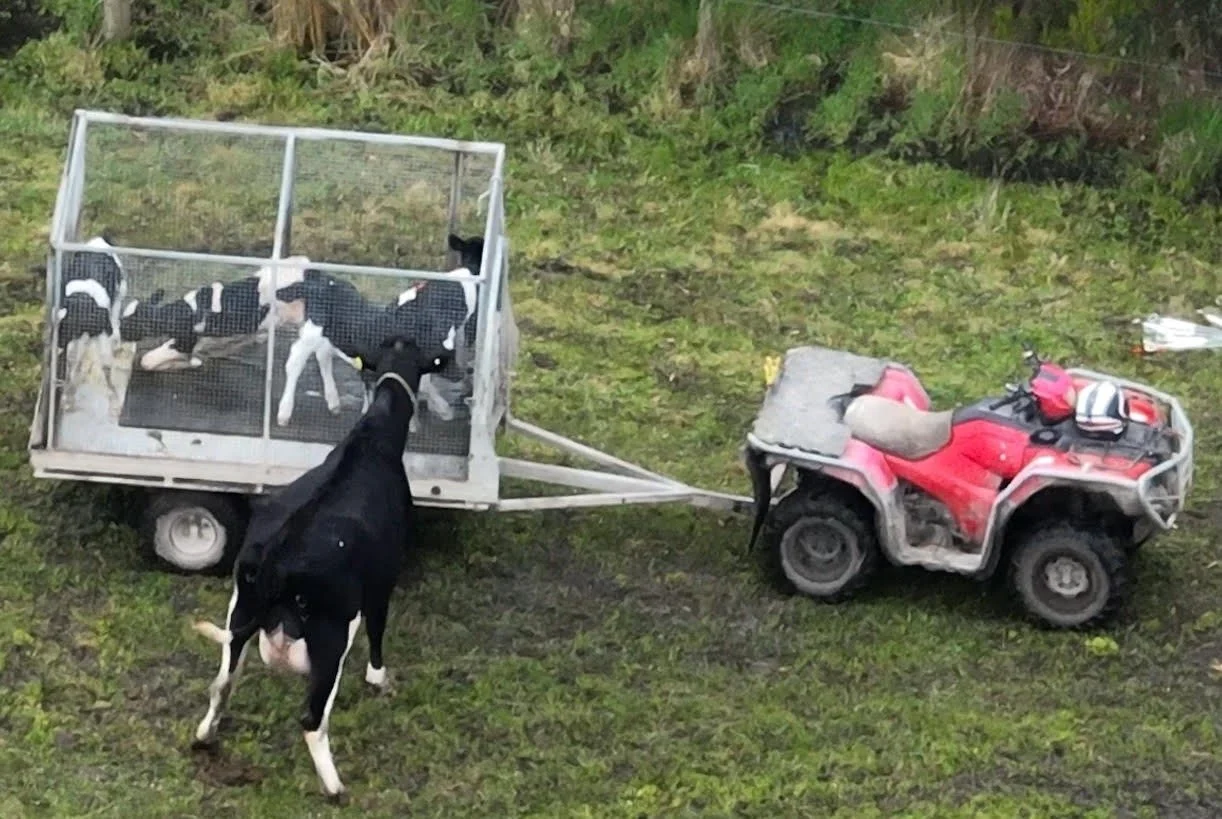
A mother cow sniffing her calf before the baby she just birthed is taken away forever
Photo by: Farm Transparency Project
Watch how a dairy worker made the motherhood connection.
Goats, Sheep, Buffalo, and Camels
While the dairy industry primarily relies on cows, by a long shot, goats, sheep, buffalo, and camels also experience forced and artificial reproduction, body mutilations, machine milking, and separation of mother and children. Mothers and children who are victims of these symptoms can be seen crying out for their family, and both show long-term emotional consequences of separation.
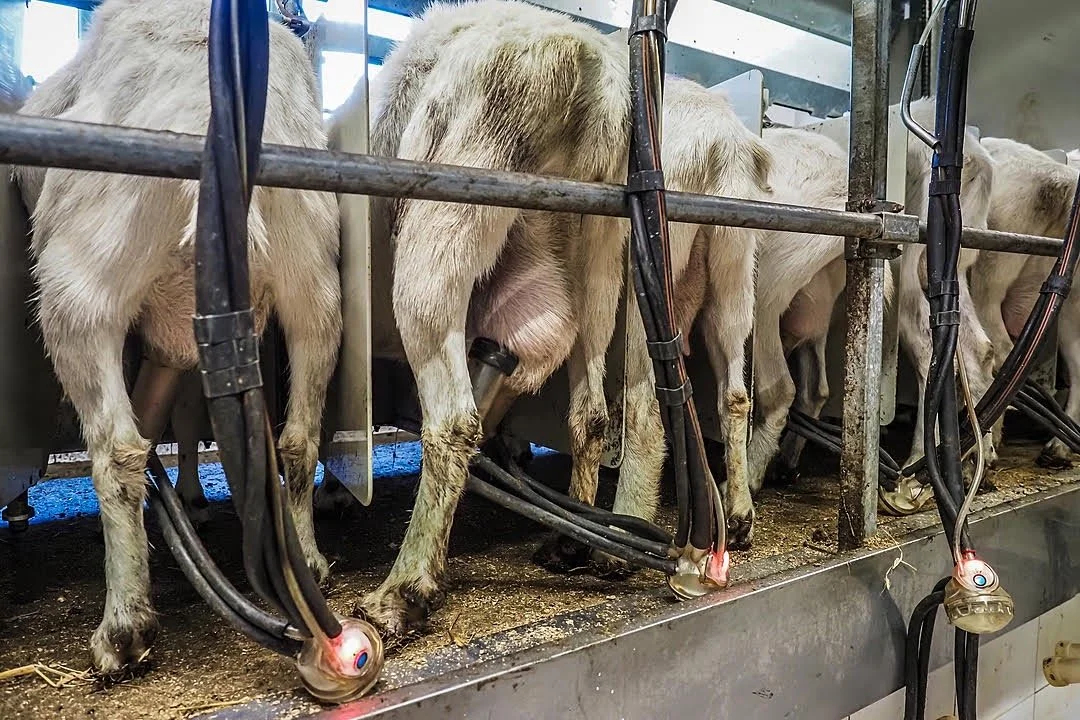
Goats being milked on an industrial dairy farm.
Photo: Lukas Vincour / Zvířata Nejíme / We Animals
Woody and Sage
If you have ever visited Ridge 2 River, you have probably met the twin brothers Woody and Sage. These playful and joyous boys were born into the dairy industry and were on the fast track to being killed as byproducts, unable to reproduce and make milk themselves, and too expensive to keep around. They were separated from their mom and offered for $20 to anyone who would take them quickly, for any reason, which meant that someone could have taken them for home slaughter. Thankfully, rescue got there first, and the twins were brought to sanctuary at just four days old. While Woody and Sage’s story has a happy ending, most males born into the dairy industry are not so lucky.
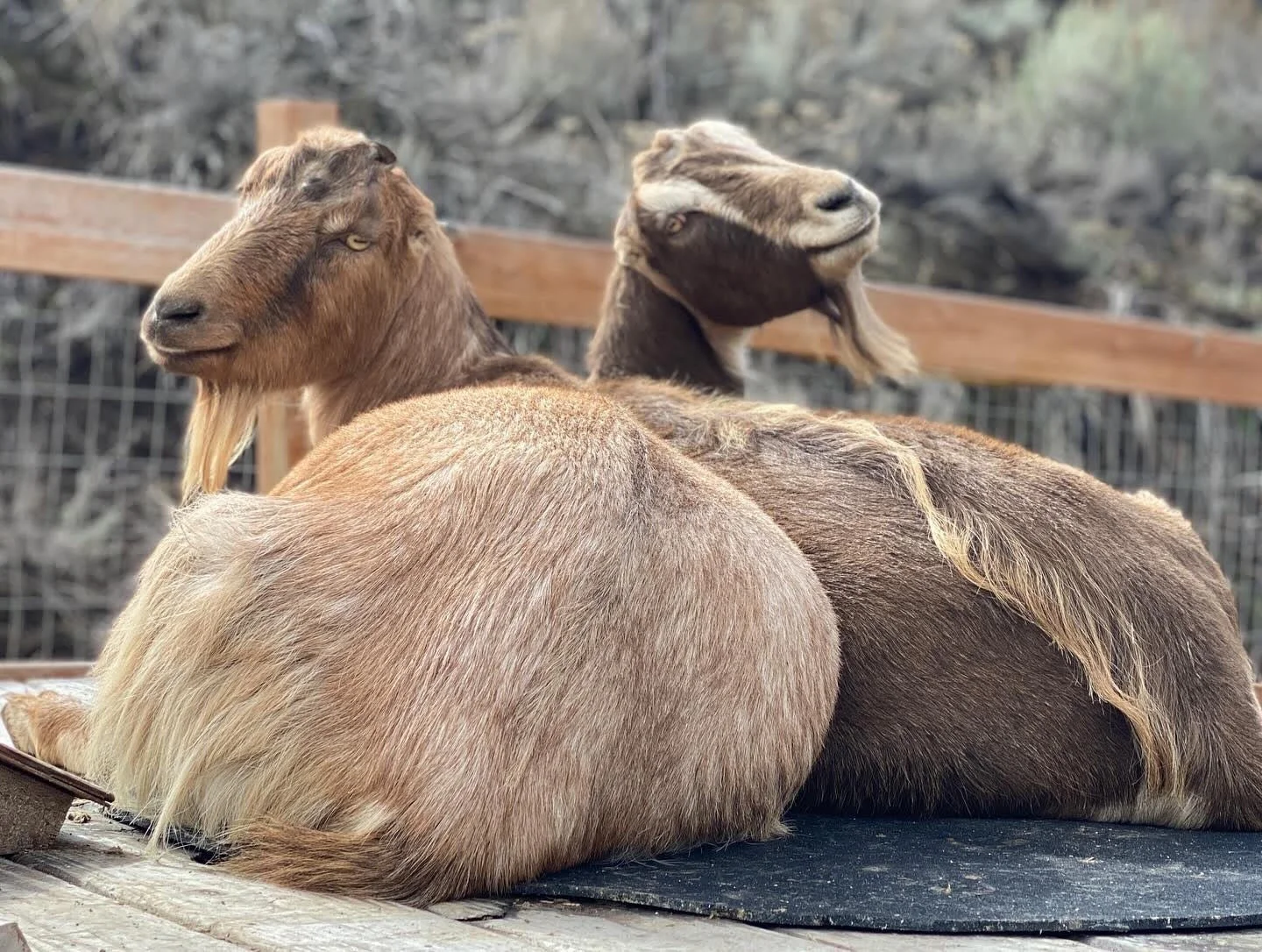
Brothers and best buds
What all of these animals share is the biological drive to nurture their young. Scientific studies have increasingly documented that mammals raised in agriculture form strong maternal bonds and display stress behaviors when separated from their offspring. The industrial system that produces dairy depends on interrupting these bonds, and is largely hidden from public view, both geographically and culturally.
Mother’s Day invites reflection on what motherhood means. When we celebrate empathy, care, and protection, we are acknowledging traits that extend beyond our own families. Recognizing that other animals also experience forms of maternal attachment can broaden how we think about compassion.
By choosing not to purchase dairy products, we can help to live the values we hold dear.
Consider supporting R2R’s efforts to create a better world for all mothers by donating at Ridge2River.org/donate.
- Written by Kris Cameron, with contributions from Ann Robin and Alisa Marvel