

According to the USDA, 13.5 percent of American households experienced food insecurity in 2024, with 8.3 percent experiencing very low food security. At the same time, industrialized animal agriculture keeps taking the resources that many low-income Americans lack; food, freshwater, and land. The U.S. government, along with consumers, have the ability to fight against these harmful effects and help combat a diet that is culturally dominant and funded by the U.S. government.
It is a scientific consensus that the Western diet is unhealthy. The modern Western diet contains an extreme amount of fat, sugar, sodium, red meat, and includes highly processed food while lacking fruits, vegetables and fiber. The Western diet is strongly connected to obesity, inflammation, and fertility issues; this is especially concerning because unhealthy foods are typically the cheapest and easiest option for many Americans. Fruits and vegetables receive only around 4 percent of annual crop subsidies while crops like soybeans and corn get most of the government funding. The crops are then used in ultraprocessed foods, making unhealthy foods become low-cost. These government subsidies show how the U.S. government allocates funds to the unhealthy system that supports the Western diet, and with as simple as a change of funding, the government has the power to make healthier food more accessible and affordable. A consumer’s food choices are particularly influenced by affordability rather than personal preference. This helps explain why many Americans are pushed toward unhealthy diets, since the food system financially encourages those choices. This creates long-term consequences for the health of low-income Americans. According to the Centers for Medicare and Medicaid Services’ “National Health Expenditure Data” report, U.S. healthcare spending reached $5.3 trillion in 2024. So much of this spending can be attributed to preventable, diet-related illness. If the government keeps supporting systems that make unhealthy food the easiest option, Americans will continue to pay the price.
The Western diet also increases the demand for the American food system. This system is incredibly harmful to the environment and is a big contributor to climate change. Large scale industrial agriculture and factory farming take massive amounts of energy, land, water, and crops, while releasing high amounts of CO2 emissions into the environment. Diets high in beef and ruminant meat produced the highest carbon footprints while plant-based diets such as the vegan diet created the lowest environmental impact overall. This proves to be a pressing environmental issue as meat consumption is a staple in the Western diet. Americans consume 70 pounds of meat per year. This is partially made possible by the large amounts of factory farming subsidies the U.S government allocates to swine and cattle, that number reaching $294 million in 2024 according to a USA Facts’s report. Despite these environmental consequences, factory farming continues to receive major support through government subsidies and weak environmental regulations. This creates a system where environmentally harmful foods are promoted more than sustainable foods all while Americans harm their bodies and ultimately consume food that harms the planet.
The Western diet is not only unhealthy and environmentally damaging, but it also creates a higher demand for food sourced unethically. Industrial animal agriculture prioritizes mass production and profit over the wellbeing and fair treatment of animals. Animals are forced into overcrowded and inhumane living conditions in order to quickly produce cheap meat, and this industry is continuing to expand as demand and subsidies increase. One shocking example of the cruelty that happens on factory farms is the killing of animals that are deemed worthless. The mass slaughter of chicks is a factory farm process that is done to dispose of chicks that are either not the right breed or gender to lay eggs (“chick culling”). Millions of chicks are slaughtered immediately after hatching, usually by being thrown into an industrial high-speed grinder while alive or being suffocated in plastic bags.
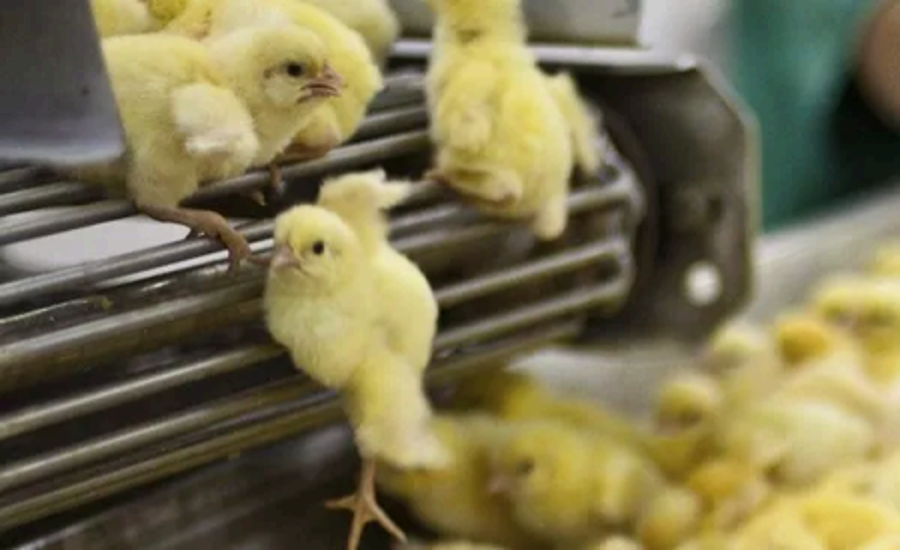
While these cruel conditions maximize the production of low-cost animal products, plant based meals are proven to be more affordable per gram of protein. Because of profit-driven practices, and millions of dollars in subsidies given to factory farms, heavily processed foods remain some of the most affordable options to lower income Americans. This creates an unfair system where corporations benefit financially while animals suffer and Americans continue experiencing higher rates of diet-related illnesses. The U.S. government already helps supply extremely unhealthy food for the Western diet through subsidies and agricultural policy, and it also has the responsibility to reduce support for unethical farming practices, and make healthier, more sustainable foods accessible to all Americans.
In conclusion, the current government-supported American food system allows for Americans to follow a diet that harms people, the environment, and animals. Because unhealthy foods are often the cheapest and most accessible options, low-income Americans are at the highest risk of obesity, disease, and increased healthcare costs. Industrial agriculture and factory farming also contribute heavily to greenhouse gas emissions, pollution, and climate change further into the future. At the same time, Americans lack access to accurate nutritional education and healthy foods despite sustainable diets being often cheaper when available. Healthier and more sustainable diets can improve public health, reduce environmental damage, and reduce food costs if properly supported through agriculture subsidy reform. However, responsibility should not only fall on only the U.S. government. Americans who have the financial means and access to make healthier and more sustainable food choices should try their best to recognize the impact their diets have on both their communities and the environment, and make a change! If together policymakers and consumers keep ignoring these issues, Americans will continue to suffer the most from preventable disease and environmental harm. We cannot claim to care about public health, the environment, or animals while continuing to make unhealthy choices the most affordable and accessible.
by Isabella Garia
May 25, 2026
Garcia 5 “Animals on Factory Farms | Animal Welfare Institute.” Animal Welfare Institute, 4 Apr. 2026,
awionline.org/programs/farmed-animals/animals-on-factory-farms/.
Centers for Medicare & Medicaid Services. “NHE Fact Sheet.” Www.cms.gov, U.S. Centers for Medicare & Medicaid Services, 6 Sept. 2023, www.cms.gov/data-research/statistics-trends-and-reports/national-health-expenditure-data/nhe-fa ct-sheet.
Dixon, Kiera A et al. “Modern Diets and the Health of Our Planet: An Investigation into the Environmental Impacts of Food Choices.” Nutrients vol. 15,3 692. 30 Jan. 2023, https://pubmed.ncbi.nlm.nih.gov/36771398/
Laninga, Dee. “Putting Our Money Where Our Mouths Should Be: The Great Contradiction between U.S. Food Subsidies and Dietary Guidelines | Farm Action.” Farm Action, 4 Aug. 2022, farmaction.us/2022/08/04/putting-our-money-where-our-mouths-should-be-the-great-contradicti on-between-u-s-food-subsidies-and-dietary-guidelines/.
“Top 5 Barriers to Sustainable Eating.” Foodeducators.eu, 2025,
www.foodeducators.eu/news-and-events/article/top-5-barriers-to-sustainable-eating.
Mace, Jenny L et al. “The Missing Target: Why Industrialized Animal Farming Must Be at the Core of the Climate Agenda.” Animals : an open access journal from MDPI vol. 15,22 3256. 10 Nov. 2025, https://pmc.ncbi.nlm.nih.gov/articles/PMC12649370/
Pancrazi, Roberto et al. “How distorted food prices discourage a healthy diet.” Science advances vol. 8,13, 2022, https://pubmed.ncbi.nlm.nih.gov/35353561/
Rakhra, Varundeep et al. “Obesity and the Western Diet: How We Got Here.” Missouri medicine vol. 117,6, 2020, https://pmc.ncbi.nlm.nih.gov/articles/PMC7721435/
Hussain, Grace. “Meat Consumption in the U.S. Is Growing at an Alarming Rate.” Sentient Media, 22 Dec. 2023, sentientmedia.org/meat-consumption-in-the-us/.
USDA. “USDA ERS - Food Security in the U.S.” Usda.gov, 2025, www.ers.usda.gov/topics/food-nutrition-assistance/food-security-in-the-us.
USA Facts. “Federal Farm Subsidies: What the Data Says.” USAFacts, 4 June 2019, usafacts.org/articles/federal-farm-subsidies-what-data-says/.